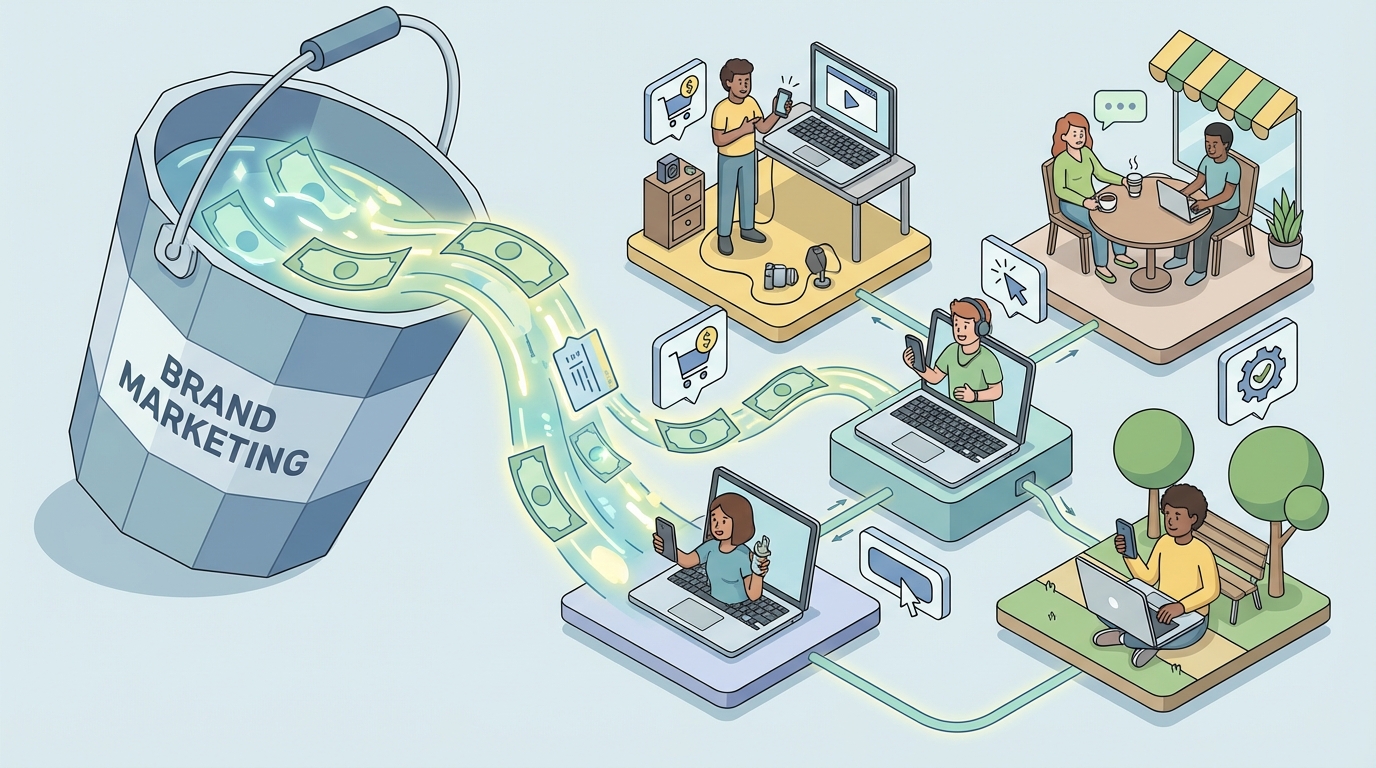
When brands redirect more than $1 billion into performance-based creator deals, it isn’t a rounding error—it’s a seismic shift. After years of affiliate links, whitelisting pilots and nascent social commerce tests (TikTok Shop, YouTube Shopping), 2025 is shaping up as the year CFOs finally step behind the wheel of influencer marketing. Finance teams now demand ROI on every dollar, and creators must adapt or risk being sidelined.
Key Takeaways
- Brands offload risk; creators face revenue volatility unless they secure hybrid guarantees.
- Micro- and mid-tier creators with repeatable funnels and hardcore tracking dominate conversions.
- Usage rights and paid amplification (Spark ads, whitelisting) are now line items on media budgets.
- AI-driven attribution tools favor last-click models unless creators push for multi-touch credit.
The CFO Signal Behind the $1B Shift
According to the Influencer Marketing Hub 2024 report, performance-based influencer budgets jumped over 35% year-over-year. Facing economic headwinds and rising ad rates, CFOs at brands like Nike and Sephora have reallocated up to 15% of their influencer spend into pay-on-results models. These finance leaders report a 20–30% lift in average order value (AOV) on tracked creator links versus standard display ads (IMH, 2024).
eMarketer forecasts that by Q4 2025, direct-to-consumer challengers such as Glossier and Gymshark will spend more on affiliate and commission-based creator deals than on traditional banner ads, underscoring the permanent realignment of marketing budgets.
Case Study: The Rhode $1B Buyout
Last spring, creator network Rhode sold a majority stake to Digital Turbine for $1 billion—proof that the industry is evolving into scalable performance platforms, not just one-off posts. (Source: AdWeek, March 2025). Rhode’s co-founder told AdAge that brands now value “predictable return curves over viral sparks,” driving them to integrate Rhode’s attribution dashboards directly into their media planning tools.
While nine-figure exits remain rare, mid-tier creators can emulate Rhode’s model by negotiating revenue share, tiered bonuses and extended media licensing in their contracts.
What’s Fueling the Surge?
- Advanced Attribution: Shopify’s creator channel, Impact.com and Linkfire reporting now tie sales—and cancellations—directly to social posts, giving CFOs confidence in last-click metrics. Brands like Allbirds use these UTM-tagged links to optimize creative in near real time.
- Creator-Generated Ads: Meta and TikTok internal data show creator-produced ads outperform brand-created spots by 15–25% in engagement rate (Meta Q1 2025 internal deck). This drives demand for usage rights and whitelisting fees.
- AI Forecasting: Platforms such as Hyros, TripleWhale and Rho Analytics leverage machine learning to predict ROAS by creator cohort, automate commission payouts and flag suspicious click patterns instantly.
Winners and Losers in the ROI Era
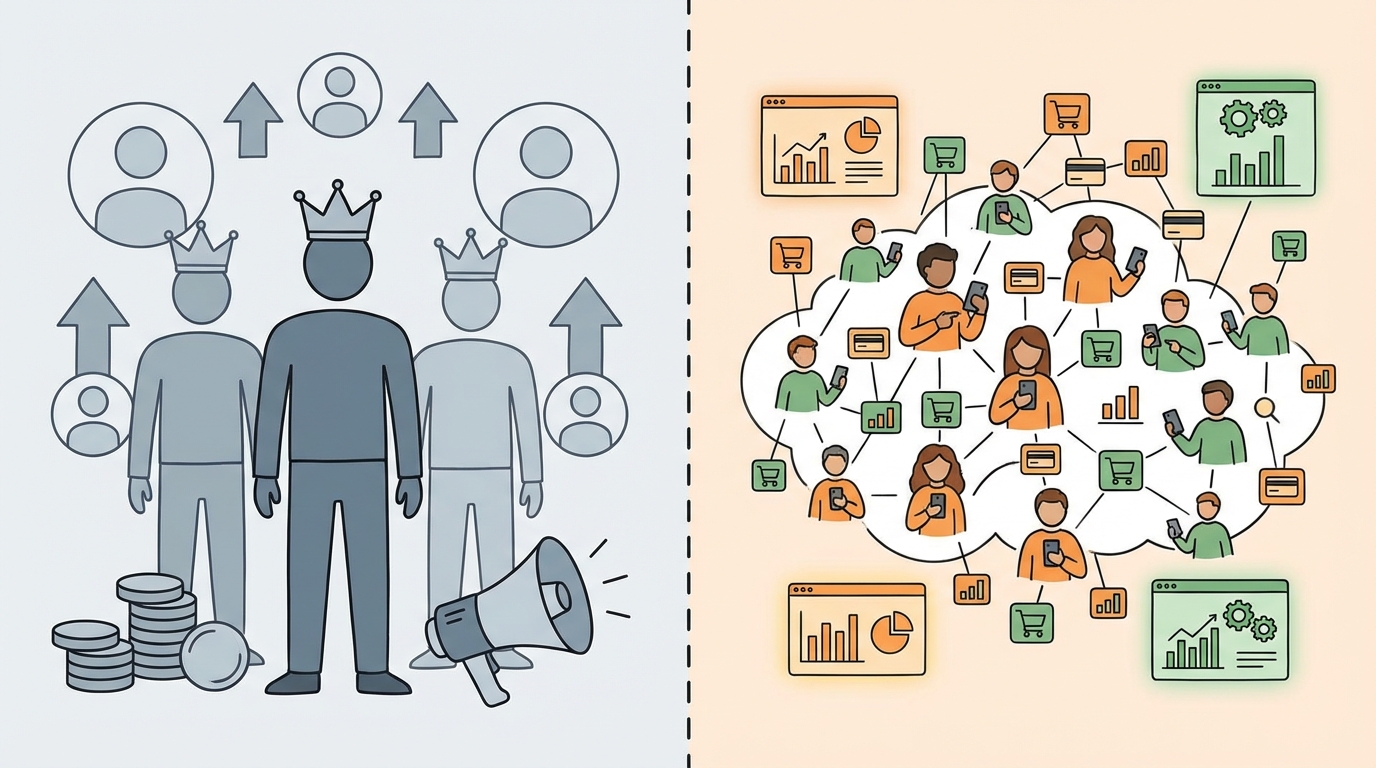
Winners: Mid-tier creators pairing niche expertise with clean conversion stacks—think parenting vloggers with Shopify plug-ins or fitness coaches using exclusive promo codes. Many report six-figure annual affiliate commissions alongside modest retainer fees.
Losers: Mega-influencers banking on reach alone. When CPMs climb and CAC spikes, CFOs question $500K flat fees for posts that barely move the needle on conversions.
Negotiating Hybrid Economics
Pure CPA (cost-per-action) deals can leave creators cash-flow starved with net-45/60 payment terms and clawbacks on returns. Hybrid structures—a modest minimum guarantee plus tiered commissions and milestone bonuses—strike a balance:
- A production-cost minimum guarantee covering shoot days and editing
- Commission tiers activating at 10K, 50K and 100K tracked sales
- Bonus payouts for hitting LTV (lifetime value) benchmarks across cohorts
Brands including Urban Outfitters now incorporate fallback guarantees into their creator RFPs to secure top talent and creative customization.
Pricing Your Usage Rights
When a brand wants to repurpose your organic post as a paid ad, treat it like a media buy, not a favor. Core negotiation points include:
- Separate licensing fees for organic content vs. paid amplification
- Spend caps, territory and platform limitations
- Contract duration (30, 60 or 90 days) with renewal and extension clauses
Marketing execs at Sephora warn that unclear rights frameworks lead to “mystery spend” and creative overuse, undermining ROI transparency.
Attribution Politics & Multi-Touch Credit
Last-click models over-credit retargeting efforts while starving top-of-funnel creators of rightful credit. To push back, creators should:
- Insist on multi-touch attribution dashboards via Google Analytics 4, Braze or the brand’s CDP
- Define UTM hierarchies that distinguish awareness, consideration and conversion phases
- Request view-through and assisted-conversion metrics in monthly reports
Brands piloting multi-touch pilots—like L’Oréal’s use of mParticle—report a more equitable ROI view, boosting overall creator satisfaction and willingness to invest in premium content.
Designing High-Performance Creative
Quantity alone won’t win—publish smarter. High-performance creative features:
- Problem/solution storytelling woven with authentic social proof
- Clear offer mechanics, concrete CTAs and expiration cues
- Angle refreshes every 4–6 weeks to prevent audience fatigue and algorithmic penalties
Performance marketer Grace Lee notes, “We A/B test thumbnails and first-three-second hooks; it’s the difference between a 1% lift and a 20% lift in click-through rates.”

Action Plan for Creators
- Install receipts: unique coupon codes, UTMs, storefront links and post-purchase surveys asking, “Who influenced your purchase?”
- Build a slick one-pager with last quarter’s tracked sales, AOVs and internal rate of return (IRR) to package in pitches.
- Negotiate hybrids: guarantee + commission + tiered bonuses + make-goods for outages or fraud.
- License usage correctly: separate organic vs. paid amplification, define spend caps and platform scopes.
- Diversify platforms but unify tracking: maintain consistent UTM structures across Instagram Reels, TikTok and YouTube Shorts.
Brand-Side Best Practices
While pure CPA deals reduce upfront spend, hybrid economics unlock both high-quality creative and reliable performance:
- Allocate 10–15% of budgets to testing and creative iterations up front
- Offer minimum guarantees to secure top-tier creators
- Keep rights structures transparent so creators understand their upside
- Implement fraud detection and brand-safety checks to protect ROI
Looking Ahead: The Next Frontier
As 2026 approaches, expect more AI-driven dynamic creative optimization, real-time revenue share dashboards and tighter cross-device attribution. Brands piloting VR and AR shopping experiences may push for in-app creator endorsements, adding complexity to usage-rights negotiations and commission structures.
In Summary
The $1 billion pivot to performance-based creator partnerships marks the CFO era of influencer marketing. Winners will be creators who prove sales, negotiate hybrid economics and price usage rights like media. Those chasing one-off flat-fee deals risk missing the conversion train. Bring your receipts, secure your floor and build upside—or you’ll be doing performance work for brand-awareness pay.
Sources: Influencer Marketing Hub Report 2024; AdWeek, March 2025; Meta & TikTok internal benchmarks; interviews with marketing leaders at Sephora, Digital Turbine and Urban Outfitters; eMarketer Q1 2025 forecast.
Leave a Reply