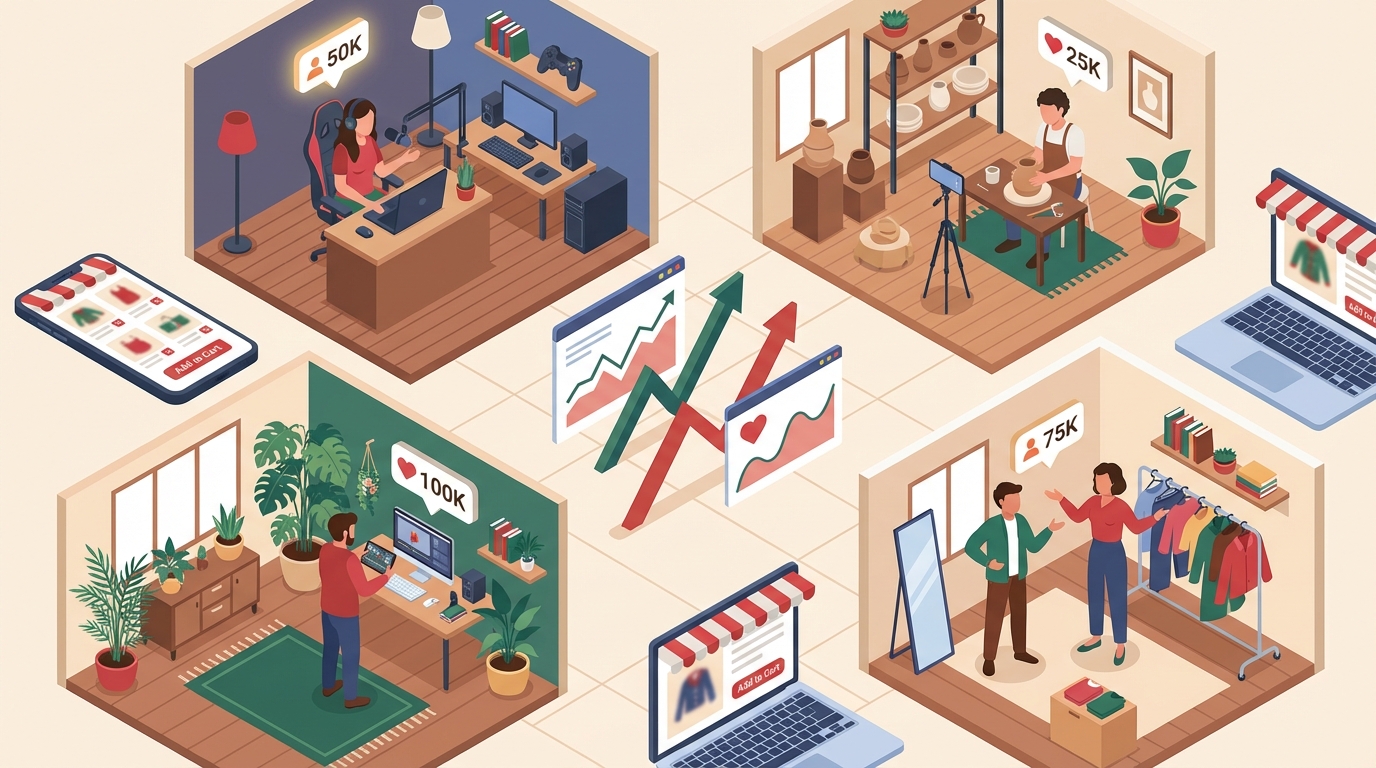
During Prime Day 2025, creator-driven content generated an estimated 18–20% of total online sales, according to Amazon’s internal reporting and a November 2025 eMarketer Social Commerce Survey [1][2]. At the same time, over 21% of holiday shoppers this season plan to buy gifts directly through social media, nearly double last year’s rate [2]. Niche micro-creators—those with 10,000 to 100,000 followers—are turning tight-knit communities into reliable conversion engines, but brands must balance their strategies against platform volatility and compliance hurdles.
Key Metrics and Market Context
- Average engagement rates for micro-creators on TikTok and Instagram sit between 5–10%, versus 1–3% for mega-influencers, per CreatorIQ’s 2025 Benchmark Report [3].
- Trust in creator recommendations rose by 30 percentage points in 2025 to 42%, with Gen Z (18–24) leading at 52% trust levels [2].
- Social commerce sales are projected to exceed $83 billion in 2024, driven by TikTok Shop and affiliate integrations, according to Statista’s Live Commerce Trends report [4].
When and How to Activate
Holiday campaigns now kick off 8–10 weeks before Black Friday. Brands seeding products to micro-creators in early September see better pacing, versus a late-November blitz. Raw, unscripted demos and serialized concepts—think “12 Days of Cozy Gifts” or “Build Your Budget Tech Bundle”—outperform polished ads. For instance, DTC home brand Luna Home launched a nine-video series from Oct. 15 to Nov. 30; its “Glow Candle Set” sold out in under four hours and drove a 35% lift in affiliate sales [5].
Platform Dynamics
TikTok Shop’s one-tap flow—discovery, discount, checkout—reduces discovery-to-purchase time by roughly 40%, per Nielsen’s 2025 Social Commerce Study [6]. Instagram’s in-app affiliate dashboards now show creators real-time KPIs, while YouTube Shopping links let audiences check out without leaving the video. Yet platform algorithm changes can drop views overnight; “Brands need nimble budgets to reallocate spend if a feed update cuts reach by 20–30%,” warns Rachel Lin, senior analyst at eMarketer.
Balancing Expectations: Limits of Micro-Creators
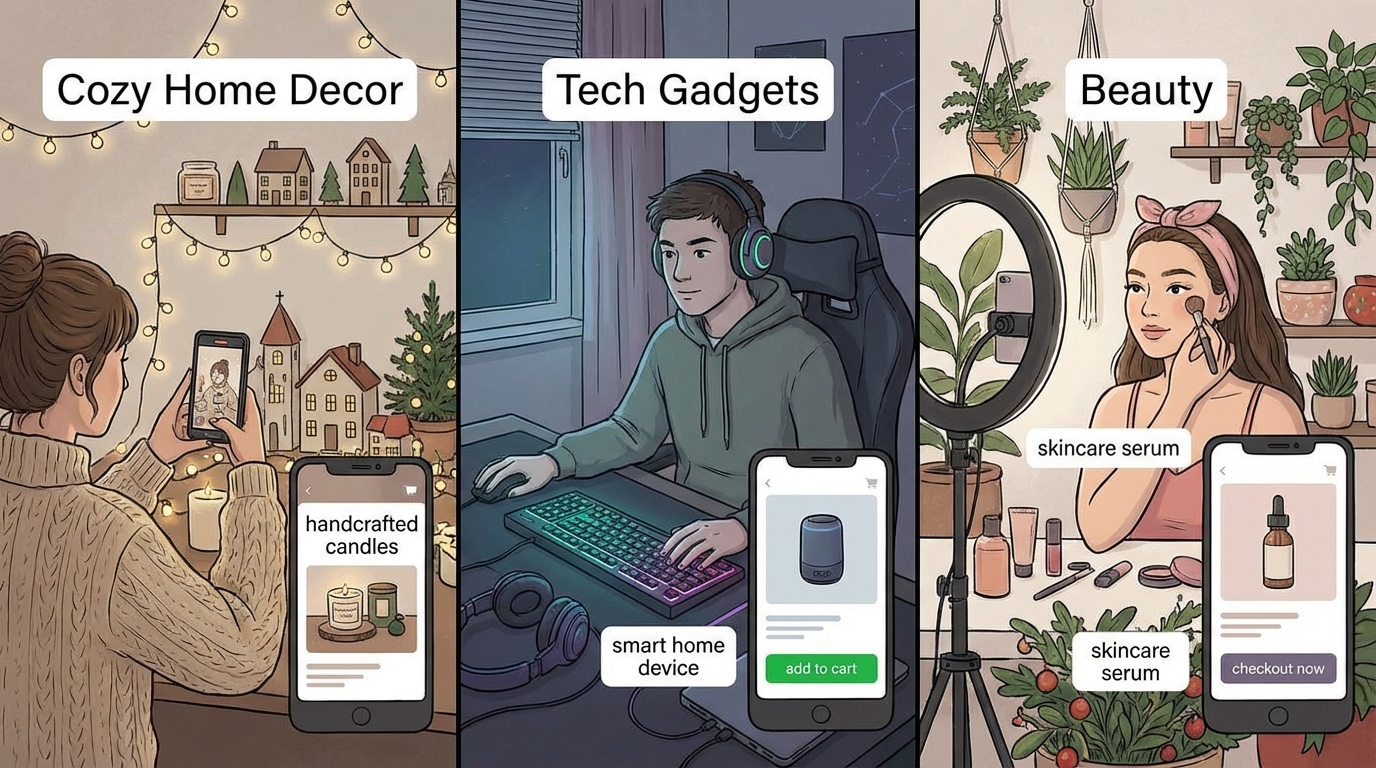
Micro-creators excel in niche categories—clean beauty, cozy décor, budget tech—but for high-value, research-heavy products like premium electronics or luxury travel packages, macro-influencers and paid search still deliver 3–5× higher ROI. Overreliance on a single cohort can also backfire: one apparel brand saw a 30% spike in returns after a viral live sale, attributing the mismatch to limited product demos and insufficient sizing guidance.
Risk Management and Mitigation
- Compliance: Ensure full FTC disclosures on posts; rotate promo codes monthly to avoid fatigue.
- Attribution: Combine last-click affiliate data with multi-touch models and CRM integrations to capture true lifetime value.
- Inventory & Returns: Prep stock levels with 20% buffer during live events; include honest demos to reduce post-holiday refund rates, which can spike 25% without proper transparency [4].
- Platform Dependence: Diversify across two to three channels and repurpose top-performing clips as paid ads and email content to hedge against algorithm shifts.
Real-World Case Study
Beauty brand FreshGlow partnered with micro-creator @EllaCleanBeauty (45K followers) for a “Holiday Skincare Essentials” series. Ella’s unfiltered pros-and-cons animations drove a 12% engagement rate and lifted storefront conversions by 30% over four weeks in November. FreshGlow credits the performance to early briefing calls, clear affiliate link setups, and monthly check-ins on real-time dashboards.
Action Steps
- Brands: Start outreach by early September; prioritize niche fit over follower count; set clear affiliate KPIs linked to revenue; build in buffer stock for live drops.
- Creators: Define your specialty and audience; disclose partnerships fully; balance praise with candid downsides; use analytics to refine rates and formats.
- Both: Test live-shopping formats; diversify codes and creative approaches; repurpose best clips for ads and newsletters; review compliance guidelines quarterly.
Conclusion
Niche micro-creators have shifted from sidekicks to sales catalysts, driving nearly a fifth of Prime Day 2025 revenue and influencing over 20% of holiday purchases. Their trust-driven engagement can outpace traditional ads on conversion and cost efficiency—but only when brands build in risk management, diversify platforms, and balance portfolios with macro-influencers and paid media.
Leave a Reply